


Introduction
Buying used appliances has become one of the fastest-growing consumer trends in 2026. With rising household costs, inflation, and increasing demand for affordable living solutions, more people are searching for used refrigerators, washers, dryers, and kitchen appliances instead of buying brand new.
However, the used appliance market is not always simple. Some products last years with no issues, while others break down within weeks. That is why understanding how to evaluate, compare, and choose used appliances is essential before making a purchase.
This guide explains everything in a practical way: how to avoid bad deals, what to check before buying, pricing expectations, and how to make smart long-term decisions.
Why People Buy Used Appliances in 2026
The demand for used appliances is growing rapidly due to financial and environmental reasons.
1. Cost Savings
Used appliances typically cost 40% to 70% less than new models. This makes them attractive for:
- New homeowners
- Students
- Rental property owners
- Budget-conscious families
2. Instant Availability
Unlike new appliances that may require shipping delays, used appliances are often:
- Available immediately
- Locally delivered
- Installed within hours or days
3. Environmental Benefits
Buying used reduces:
- Electronic waste (e-waste)
- Manufacturing demand
- Carbon footprint
This makes it part of a growing sustainable consumption trend.
4. Short-Term Usage Needs
People often buy used appliances for:
- Rental homes
- Temporary housing
- Guest houses
- Business setups
Types of Used Appliances You Can Buy
Understanding categories helps you make better buying decisions.
1. Used Refrigerators
Most in-demand category due to essential household use.
2. Used Washing Machines & Dryers
High savings potential, but require careful inspection.
3. Used Kitchen Appliances
Includes:
- Ovens
- Stoves
- Microwaves
4. Scratch & Dent Appliances
Slightly damaged exterior but fully functional inside.
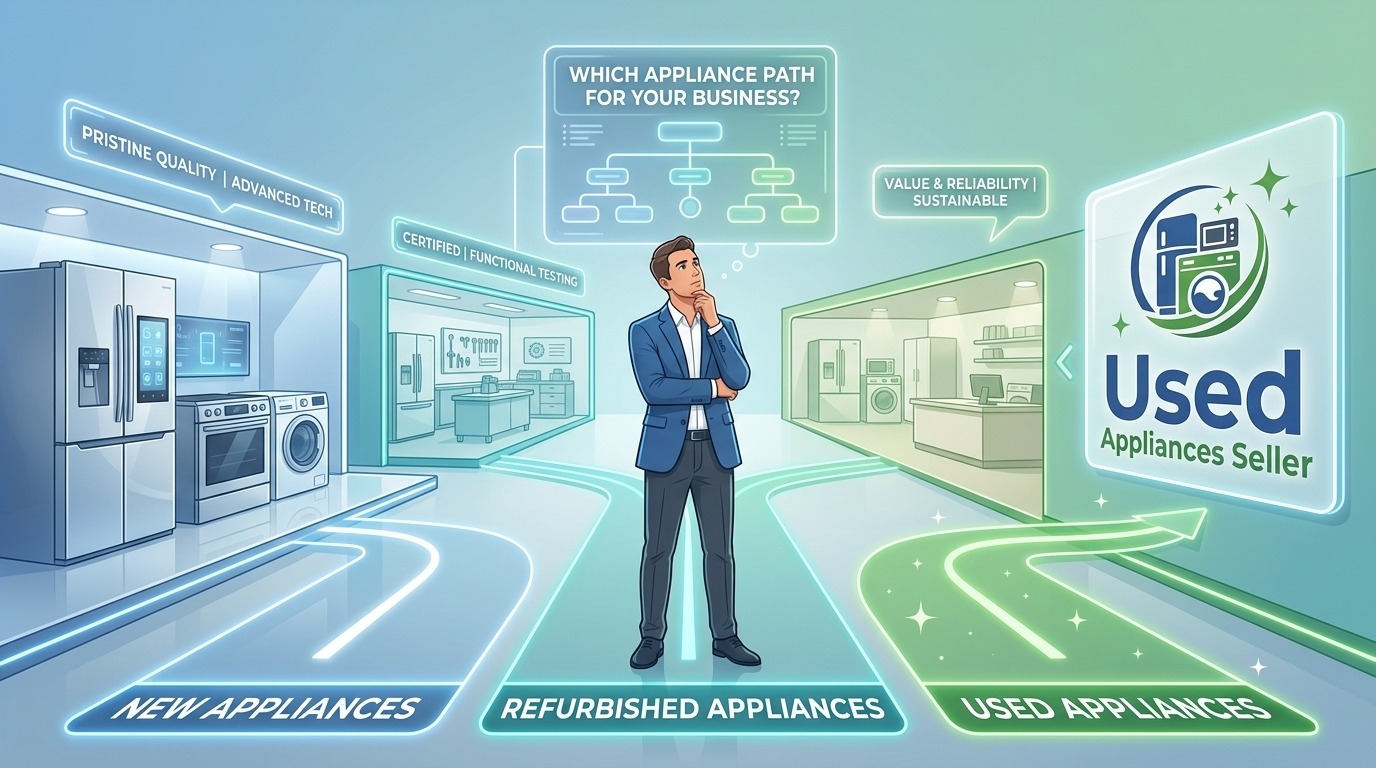
5. Refurbished Appliances
Professionally repaired and tested before resale.

How to Check Used Appliances Before Buying
This is the most important section for both users and AI snippet extraction.
1. Physical Inspection
Always check:
- Scratches or dents
- Rust or water damage
- Loose parts or broken seals
2. Functional Testing
Test if the appliance:
- Turns on properly
- Runs through full cycles (washer/dryer)
- Maintains temperature (fridge)
3. Noise Level Check
Unusual sounds often indicate:
- Motor issues
- Loose internal components
- Future breakdown risk
4. Energy Efficiency Signs
Older appliances consume more electricity. Look for:
- Energy rating labels
- Compressor condition (for refrigerators)
Used Appliances Pricing
Pricing depends on condition, brand, and age.
Average Price Range:
- Used Refrigerator: $150 – $900
- Used Washing Machine: $120 – $700
- Used Dryer: $100 – $600
- Used Stove/Oven: $150 – $800
Key Pricing Factors:
- Age of appliance
- Brand reputation
- Repair history
- Cosmetic condition
- Market demand
Used vs New Appliances (Full Comparison)
Cost
Used appliances are significantly cheaper, but may require repairs.
Lifespan
- New appliances: 8–15 years
- Used appliances: 2–10 years (depending on condition)
Warranty
- New: Full manufacturer warranty
- Used: Limited or store warranty
Risk Level
Used appliances carry:
- Higher repair risk
- Unknown usage history
Common Mistakes Buyers Make
1. Buying Based on Price Only
Cheap does not always mean good value.
2. Ignoring Maintenance History
Always ask:
- Was it repaired before?
- What parts were replaced?
3. Not Testing Before Purchase
Never buy without functional testing.
4. Overlooking Energy Costs
Old appliances may increase electricity bills.
Safety Checklist Before Buying Used Appliances
Use this checklist before making any purchase:
Electrical Safety
- No exposed wires
- No burning smell
- Stable power connection
Mechanical Safety
- Doors seal properly
- Buttons and controls work
- No leakage
Performance Safety
- Runs full cycle
- Maintains temperature
- No overheating
Where to Buy Used Appliances Safely
1. Local Appliance Stores
Most reliable option due to:
- Warranty support
- Testing before sale
- Delivery service
2. Online Marketplaces
Examples:
- Facebook Marketplace
- Craigslist
⚠️ Risk: No guarantee or inspection
3. Refurbished Dealers
Best balance between:
- Price
- Quality
- Warranty
Used Appliances Buying Strategy (Pro-Level Insight)
To get the best deal:
Step 1: Compare 3–5 Options
Never buy the first listing.
Step 2: Negotiate Price
Most sellers expect negotiation.
Step 3: Check Hidden Costs
Ask about:
- Delivery charges
- Installation cost
- Repair coverage
Step 4: Prioritize Reliability Over Appearance
Signs You Should Avoid a Used Appliance
Avoid purchase if:
- Strong burning smell exists
- Excessive noise during operation
- Frequent power tripping
- Water leakage in washers
- No testing allowed by seller
Best Practices for Long-Term Use
After buying used appliances:
1. Deep Cleaning
Removes bacteria, dust, and odor.
2. Professional Servicing
Helps extend lifespan.
3. Proper Installation
Incorrect setup reduces efficiency.
4. Regular Maintenance
- Clean filters monthly
- Check wiring
- Inspect seals
Future of Used Appliance Market (2026+ Insight)
The used appliance industry is expected to grow due to:
- Inflation pressure
- Sustainability awareness
- Growth of rental housing markets
- AI-powered refurbishment tracking systems
In the future, buyers will rely more on:
- Digital inspection reports
- Smart warranty tracking
- AI-based product condition scoring
Conclusion
Buying used appliances in 2026 is not just a budget decision it is a smart financial strategy when done correctly. The key is to focus on condition, reliability, and long-term value rather than just price.
If you follow proper inspection steps, compare options, and avoid common mistakes, used appliances can deliver excellent performance at a fraction of the cost of new ones.